What a COA is
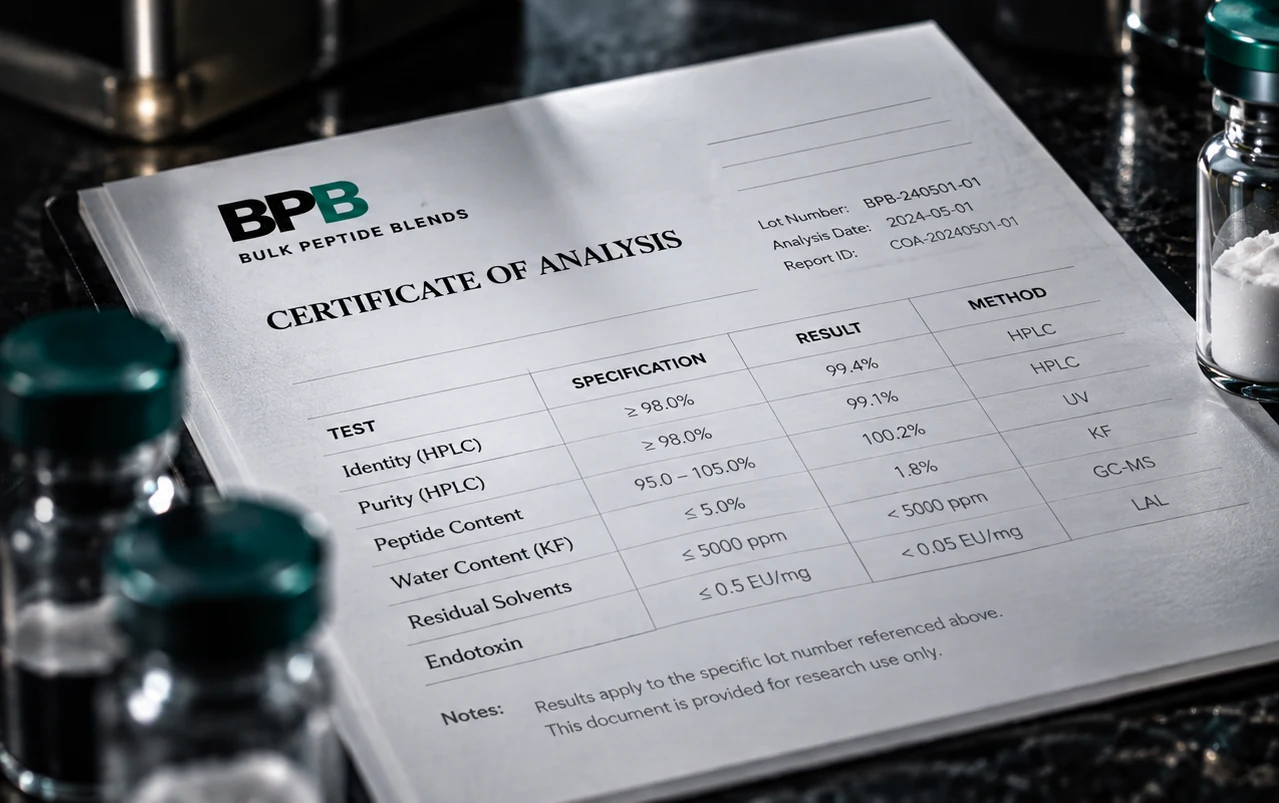
A COA is a report issued by a testing laboratory for a specific sample. It records which tests were run, the method used for each, the acceptance criteria (the specification) where one applies, and the result the laboratory obtained.
Because it describes one sample, a COA is evidence about that sample and the lot it was drawn from. It is not a general statement about a product line, a supplier or future lots.
The fields to check first
- Product identity — the compound name and, where given, the declared amount per vial. It should match exactly what you ordered.
- Lot or batch number — the link between the paper and the vials in your hands. Check it against the label on the vials you receive.
- Sample description and dates — when the sample was received and tested. Very old results may not reflect the material being sold today.
- Laboratory identity — the name and address of the laboratory that performed the tests, so the report can be traced to its source.
- Method, specification and result for each test — a result without its method, or without a stated specification, is harder to interpret.
What the common results mean
- Identity confirms the material is the compound it is claimed to be. It is usually established by mass spectrometry (MS or LC-MS), which checks that the measured molecular weight matches the expected value.
- Purity is usually reported by HPLC as the share of the main peak in the chromatogram. It describes how much of the detected material is the target peptide — not how much peptide is in the vial.
- Net content (or quantity) reports how much peptide was measured per vial, typically in milligrams. It can differ from the label amount within a stated tolerance.
- Endotoxin and sterility, when reported, are separate tests with their own methods (for example LAL for endotoxin). Not every certificate includes them.
Our guide to HPLC vs. mass spectrometry explains the two main analytical methods in more detail.
What a COA does not show
- Results for other lots. Each lot needs its own documentation.
- The condition of the material after testing — for example after storage or transit.
- Impurities or properties that were not tested for. A certificate only reports the tests that were run.
- Anything about the laboratory beyond its name and the report itself — for example independence or accreditation — unless that is separately documented.
- Regulatory approval of any kind. A COA is an analytical report, not an authorization.
A practical checklist
- Match the lot number on the certificate to the lot number on your vials.
- Confirm the compound and declared amount match your order.
- Read each result alongside its method and specification.
- Check the test date and the laboratory details.
- Keep the certificate with your receiving records for that lot.
- Ask your supplier when anything is unclear — a good supplier will answer documentation questions directly.
Documentation at Bulk Peptide Blends
Representative lot results are published on our Quality page, each shown for its own lot only. Documentation is part of every sourcing conversation with qualified buyers — you can ask about it when you request pricing.
For research and development use by qualified buyers. Products are not for human or veterinary use. This guide is general educational information, not a statement about any specific lot.