1. Documentation you can trace
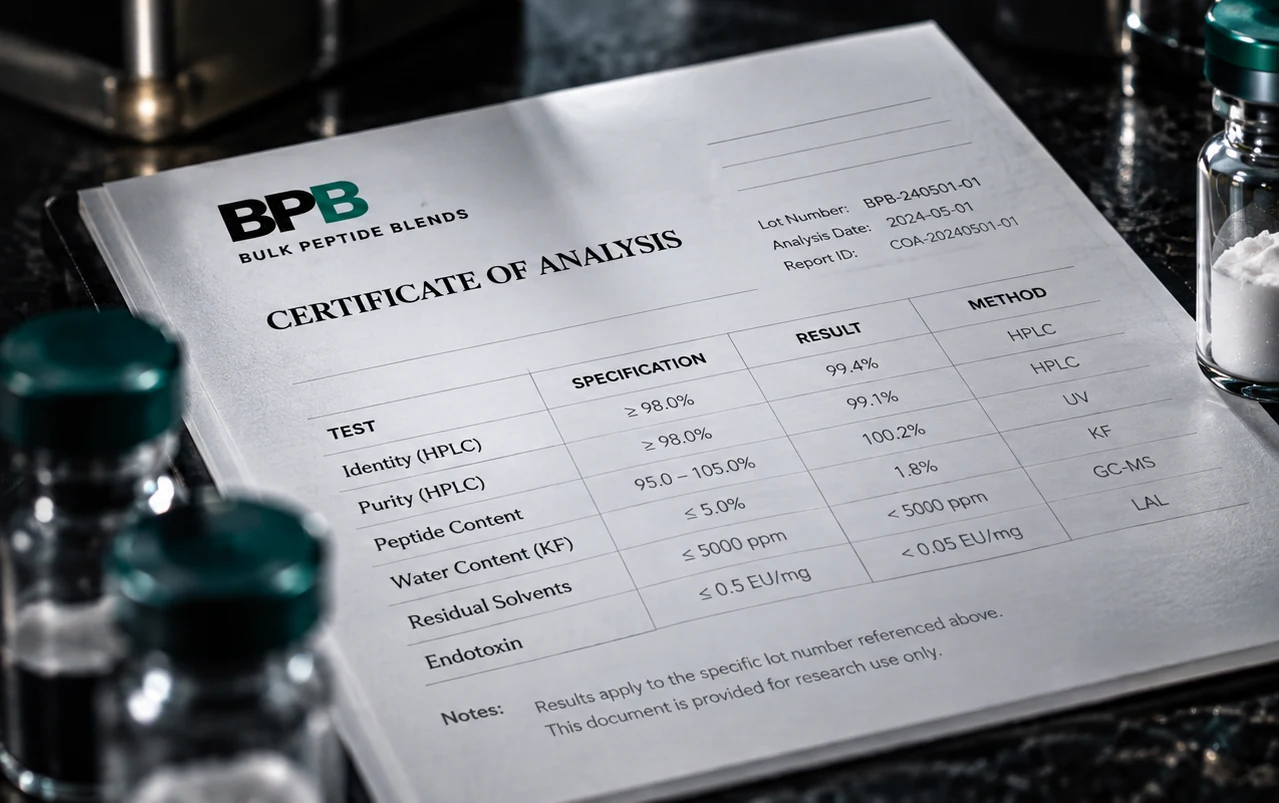
Ask how documentation is provided and how it connects to what you receive. The strongest arrangement is a lot number on every vial that matches the lot on the supporting certificate. See How to Read a Peptide COA for what to check on the document itself.
2. Consistency from order to order
A single good result matters less than repeatable ones. Ask how the supplier handles lot changes, and whether documentation is available for the specific lot you will receive rather than a generic example.
3. Clear products and units
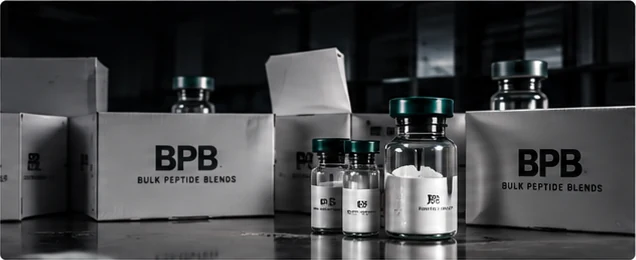
Product names, strengths and units should be unambiguous. Confirm how products are sold — per vial, per box or per case — so quotes can be compared like for like. At Bulk Peptide Blends the wholesale unit is simple: 1 box = 10 vials.
4. A commercial process in writing
- Pricing confirmed in a written quote for the quantities you need.
- Availability and timing confirmed for your order rather than assumed.
- Clear terms on who the products are for and how they may be used.
5. Communication
Notice how questions are handled before you order. Direct answers about documentation, availability and packaging are a good predictor of how problems will be handled later.
6. Research-use terms and buyer qualification
Reputable research suppliers sell for research and development use and ask who you are and what you need. That is a sign of a supplier that takes its responsibilities seriously.
7. Continuity of supply
For ongoing work, ask how the supplier plans stock and how it communicates changes. Our guide to building a reliable supply chain covers the planning side.
Next step
When you are ready to compare terms, request pricing with the products and box quantities you need; our team will reply with pricing and next steps.
For research and development use by qualified buyers. Products are not for human or veterinary use. This guide is general educational information, not a statement about any specific lot.